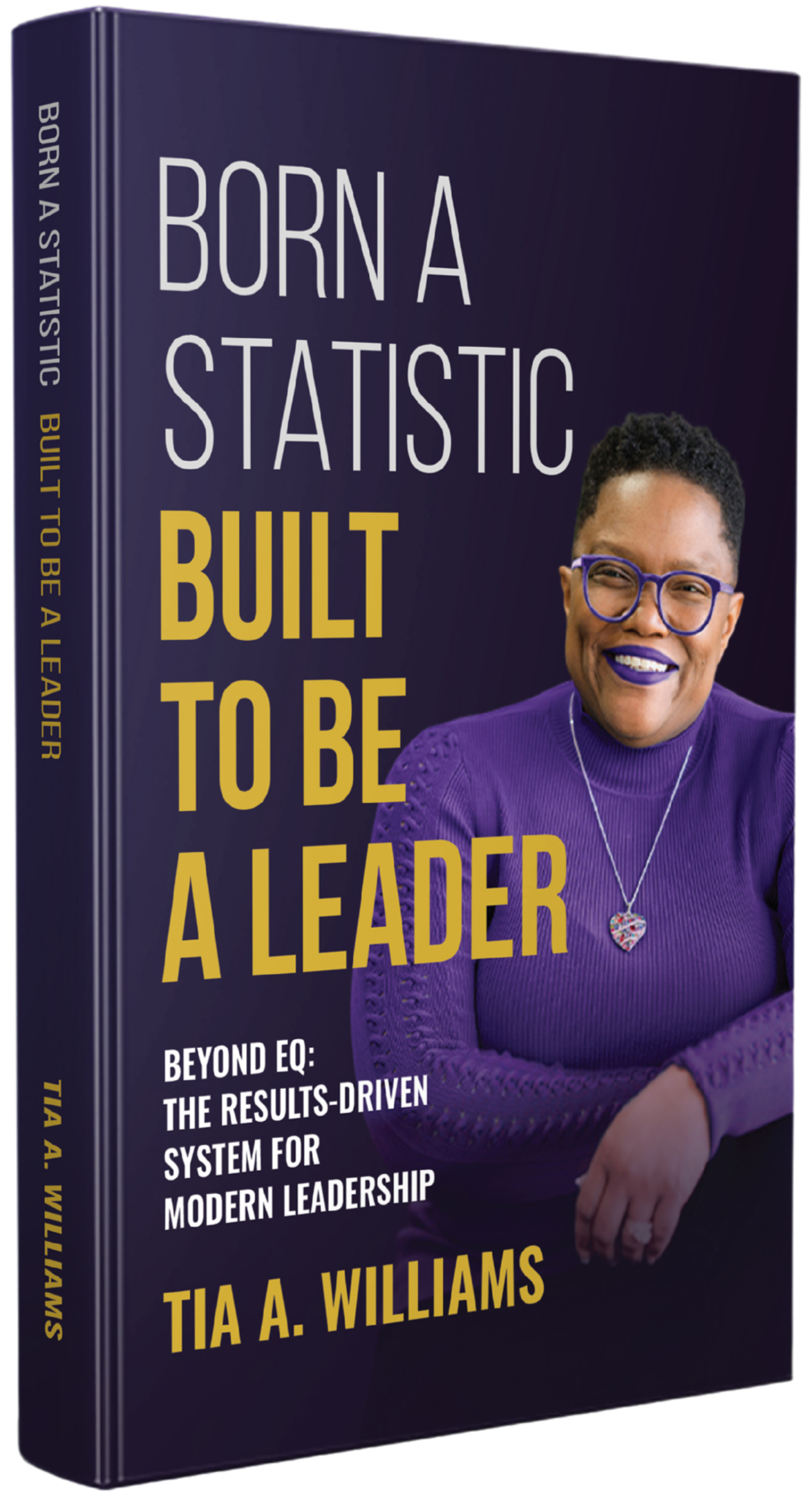
This isn't a book about leadership theory. It's about what actually happens when you're thrown into the fire without a playbook, and what you learn when you refuse to quit. These opening chapters are where it all begins — my story, and the foundation of everything that follows.
If what you read here resonates with you, the full book is available on Amazon. I think you'll want to finish it. DM me and let me know what you think on LinkedIn.
6. Relational Intelligence (RQ) And The Right-Brained Leader
7. Analytical Intelligence (AQ) And The Left-Brained Leader
8. Integrated Intelligence: More Than The Sum Of Its Parts
Part 4 — Lights. Camera. The Leadership Equation In Action
9. Skills-Based Systems (SBS)
10. The 4C Equation: The Formula For High-Performing Leaders & Teams
11. Battle-Testing The Equation: A VC-Backed M&A Case Study
12. Read The Room — Leadership In Action
13. Making The Case: An AQ-Driven Approach
14. Implementing The Equation: Your First 90 Days
Conclusion, But Not The End
15. Leading for This Era, Not The Last
Prologue
My Life in a Nutshell
Someone is always trying to put me in a box. It's been true my whole life, and it's still true today.
Just the other day, I went to the dry cleaners to pick up two collared dress shirts, one for me and one for my husband. Same cotton material, same style. His was $3. Mine was $8.
That's my life in a nutshell. A constant, quiet battle against the boxes and biases, big and small, that the world assigns because of my hair, my color, or my gender.
Some people accept being in a box. Some people are crushed by the box. And some of us live lives too big to even fit in the box.
Being labeled angers me. Even the labels people think are good. I'm Black, a woman, left-handed, and work in tech. I drive an expensive car, live in an upper-middle-class neighborhood, have natural hair, and didn't go to college. How can I afford that? The list of labels goes on, and on.
Here's one I recently heard from a woman at a networking event.
“That is not at all what I expected from you when I saw you coming.” I defied her expectation, and she insulted me with what she thought was a compliment.
Born and labeled a statistic. Built to be a leader. Lived life like a disruptor.
That's my life in a nutshell.
Preface
Why I Wrote This Book
For years, I kept the ideas within these pages hidden, convinced that I wasn't good enough. Who am I to build a system that others should respect?
Imposter syndrome held me back. I was afraid of what the critics would say. Afraid they would point to my lack of a degree, demand academic studies to back up my real-world results, and use the bias I've faced my whole life to dismiss my work.
Yet somehow, despite all of this, I was promoted five times in two years during back-to-back acquisitions. I led a department of one hundred people across three continents in a $100M+ annual recurring revenue (ARR) VC-backed SaaS company. The senior leadership team trusted me to integrate critical teams during a post-acquisition integration, one of the most challenging tasks in business.
They trusted me even though I had no formal training or degree, just the system I was building in real-time. They trusted me for my skill, my past results, and never doubted I could get it done.
We implemented a new workflow system that saved $400,000 in productivity efficiency within six months, and we were on track to save nearly $1M annually. Then we were acquired again. We retained 90% of key talent and doubled productivity. The results were undeniable.
Experience trumps credentials.
My life, my work, and my achievements are proof that this system is effective. There will always be people who don't believe in you, but you're not doing it for them.
Everywhere I looked, I saw leaders struggling with challenges I knew how to solve. I knew it was possible to create sustainable, healthy work environments while maximizing profits. It doesn't have to be either/or. Real change requires an honest conversation about what's actually broken.
This book is my way of finally sharing my thoughts and beliefs without constraints.
I'm sharing my unfiltered truth about what's broken, what actually works, and the summation of my life's work: The Leadership Equation™.
Who This Book Is For
This book is for leaders at all levels: from C-suite executives to directors and senior managers who need to build sustainable, high-performing teams without choosing between results and team well-being.
I wrote it in a conversational style to make executive-level thinking accessible.
The writing in this book intentionally overrules traditional grammar rules in favor of maintaining the tone and rhythm.
For executives, this book provides a complete system that delivers measurable ROI while valuing both people and profits, even in high-pressure, VC-backed environments. For directors and managers, it teaches the strategic thinking that senior leaders expect: how to see systems, not just symptoms, and how to build solutions that scale.
This book starts with the making of a leader. It's my story, my journey, my struggles, and how they shaped me into the executive I became. But this is no memoir. It's a strategic reframe on what it takes and what it means to lead, regardless of level or title. It's about building better leaders and teams with practical, proven systems, not fluff.
Whether you're an executive building organizational systems or a manager learning to think like one, this book gives you the framework to lead in this era, not the last.
What This Book Is (And Isn’t)
I did not write a book on leadership tactics. I know it sounds cliché, but this book will change how you think about leadership. This book is NOT a how-to manual for specific leadership levels. That's intentional. The Leadership Equation™ is a framework for building sustainable, high-performing teams by framing how leaders must think, decide, and act using their whole brain, and what they need to do to make skills-based systems stick.
This system is the architecture and blueprint for modern leadership.
The principles are universal. The implementation is personal. Don't assume a chapter doesn't apply to your role or title. The book isn't segmented that way. It's written to prove emotional intelligence (EQ) alone isn't enough, to show why traditional systems fail, and to give you the framework and practical tools to implement change or build the business case for it.
When I say I'm giving you the framework and tools, I mean this book teaches you how to think, not what to copy-paste, and that's way more powerful. The Leadership Equation™ is scaffolding. It's a flexible framework you'll adapt to your environment, not a rigid template. I won't prescribe exactly what your communication system should look like, give a paint-by-numbers checklist, or tell you which software to use. Playbooks and other systems fail when they don't account for the variability between organizations. Your context, your team, and your challenges are unique.
I'm teaching you to fish, not handing you a fish.
If you're looking for something prescriptive with step-by-step instructions for every scenario, then this isn't the book for you. If you want to learn the framework so you can build something that actually works for YOUR unique situation and environment, keep reading.
Part 1 — The Making of a Leader
Chapter 1
Born a Statistic. Built to Be a Leader.
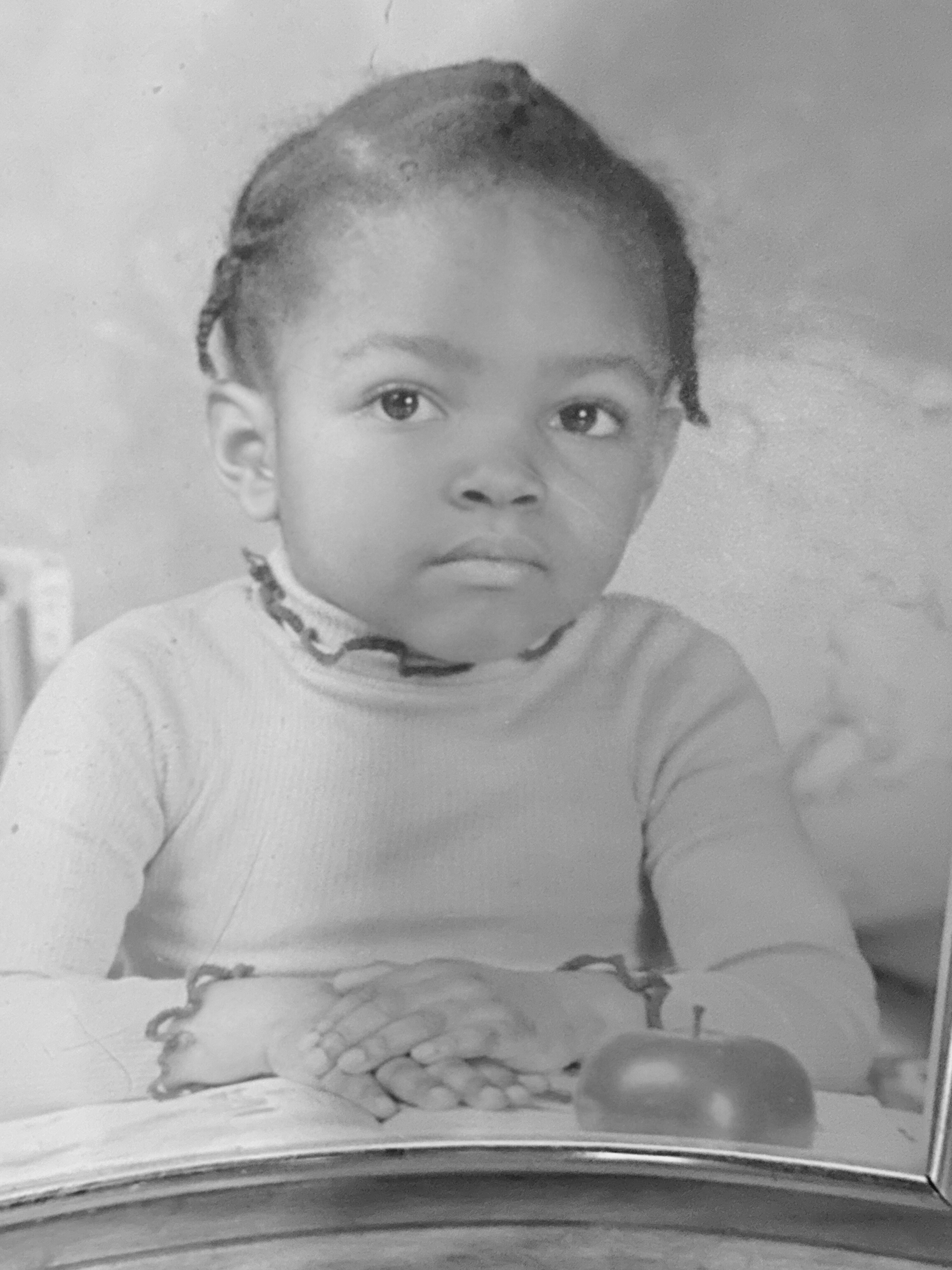
Tia A. Williams, age 5
Modern leadership is broken. Conventional leadership wisdom suggests that you must lead with empathy. Yet many emotionally intelligent leaders struggle to deliver results. Others tell leaders to be more data-driven. And many analytical leaders deliver but leave a trail of collateral damage. Many leaders believe they must choose a side. People, or performance. But that's a false choice.
This book offers a 3rd way: The Leadership Equation™. It's a system I built after working under the pressure of decades of massive organizational change. After years of watching traditional leadership methodologies fail in high-growth environments, I knew I had to do something different.
Many organizations neglect and inadvertently abuse their middle managers. These managers are unintentionally groomed as task managers and are never taught how to be leaders. There is an expectation that these managers consistently deliver results. “Yes” is expected without pushback or explanation. This mindset creates a vicious cycle of burned-out managers, high turnover, and executives wondering why their leaders can't think strategically.
This book is for the executive who needs to fix the system, and the manager just trying to survive it.
This “growth at all costs” mentality is often driven by analytical leaders who fail to see the relational impact of their decisions, creating a system where profitability takes precedence over people.
Eventually, employees lose faith in a company that repeatedly ignores their well-being.
Everything is moving so quickly in today's high-growth industries that success is often defined solely by short-term results. There's no understanding of the cause-and-effect impact of the decisions made. Leaders aren't connecting the dots because profitability is the primary indicator of success.
These leaders are often quite shocked to find out that they have “people problems.” They see their teams through rose-colored glasses, and no one dares to tell them otherwise. Who wants to go to their leader and say, “We've got problems.” So senior leaders have plausible deniability because no one wants to be the person who puts themselves at risk.
I'm the person who pushes against and openly points out the risks of this approach because I often see what others don't, and my life experiences make me a truth teller. I've lived my whole life in broken systems, and I believe that there's always a win-win scenario if people are open to it. I don't see profitability and people's well-being as contradictory forces. With an integrated approach, they create a scenario where everyone wins.
Most leadership systems are created by academics, psychologists, and theorists, which creates a gap. Diane Keaton has always been one of my favorite actresses. There's a line from the movie Mad Money that captures this perfectly. When asked how she spotted a security flaw that the experts missed, she insisted that they don't see it, “because they don't take out the trash.”
As a senior leader, if you aren't looking for it and open to it, you don't see what your teams see. You don't understand their experiences and challenges.
That analogy fits me perfectly. My understanding comes directly from my work in the system. Something that most academics, theorists, and consultants can't claim.
My life and work experiences are precisely why I was the right person to write this book.
The system in this book was born because I proverbially took out the trash so I could see what others couldn't.
These real-world experiences shaped me into who I am, and they also contributed to the success of VC-backed acquisitions and the development of successful leaders at all levels.
To understand this system and why it works, you first have to understand the life that built me. My story doesn't start in a classroom or a boardroom; it begins with me being born a statistic.
Born into a poor family thirty days before my mother's sixteenth birthday, I was supposed to be a statistic.
My parents were so young that my father had to ride his bike to see me every day because he didn't have a driver's license yet.
But being born into circumstances that others view as limitations doesn't have to define you. For some, it defines them; for others, it teaches them to be resourceful, resilient, and relentless. That's who I was. It's who I am.
I was the oldest child of the oldest child of the oldest child. Generations of women who were no strangers to hard work. My mother was the oldest of eight children. Seeing the hard-working women in my family made me a Type A personality before I even understood what that meant.
I don't know how to do anything other than work hard. The weight of being the oldest when family resources are scarce means you grow up fast. Seeing what the hard-working women in my family went through instilled in me an insane work ethic.
I've always outworked my peers without even trying because I am unwilling to give up, and I learn fast. I also have an incredible memory. My ability to recall things has always been impressive. That's not a brag, it's a statement of fact. I was working with a chatbot recently, and it actually praised me for my ability to remember. My chat sessions are like marathons that run for days or weeks. I can easily identify when it changes something and inserts incorrect information.
Because my memory is like an oversized file cabinet, I have a lot of information in my head. I am also extremely observant. As a result, there's always a maze of pathways to solving problems in my head. If there's a problem, I work on it until I find a solution. It's one of the things that made me a great IT engineer. There was rarely a problem I couldn't solve. I literally feel like I can't stop until I have a solution.
I've always approached every job like I have something to prove.
People, especially men, sometimes felt threatened by that. I remember a co-worker once telling his wife, “The competition here is fierce.” It was literally just him and me. There was no one else, and we had different areas of expertise. I was surprised that he thought I was competing with him. The only person I ever compete against is myself. My drive has never been about becoming a leader; it's about refusing to live down to the expectations and labels I've been assigned by people my whole life.
Liz J. Simpson told me, “You only fail if you give up.” By that measure, I've had very few failures in my life, because I never give up. I adapt. Even in what felt like failure, I was building something bigger without even knowing it.
I was part of the latchkey kid generation, where you got a key put around your neck. “Don't let anyone know you have that key, and don't lose it.” It was a different time. You were expected to be responsible at a young age because your parents needed you to. It wasn't a choice.
When my younger brothers were born, it made me the second mom, helping her care for my brothers while she worked three jobs. There wasn't much time for family fun. Every other Friday, when my mother got paid, we would go out to dinner and play a board game. That was our family time. The rest of my mom's time was spent keeping food on the table.
My early years were full of constant movement. A new place every one to two years meant new schools and saying goodbye to friends. Stability is so important to kids. It's how they learn to form social relationships and bonds. It's one of the reasons I still find social interactions difficult and quite awkward. Our financial situation meant we were constantly on the move. My only sense of stability came from my great-grandmother's house. My cousins and I spent most of our time there when we weren't in school.
In middle school, we moved into an apartment development that included a select number of units reserved as government Section 8 housing. I remember thinking, “This is how rich people live.” It was my first look at real middle-class living. I remember my mother trying to hide the fact that my brother was born. She was afraid we would lose the housing because there were rules about the number of people who could live in the apartment. You might be thinking, “How do you hide a baby living in an apartment?” It was challenging because we lived in the same building as the rental office. People who grow up poor are some of the most resourceful individuals on the planet.
Living in that apartment was a turning point in my life. For the first time, I had a glimpse of life outside of poverty, and it was also the first time I really understood that not everyone lived the same way we did. Poverty was all that I had ever known up to that point. As a kid, you believe your lived reality is what everyone in the world is experiencing. Everyone I knew lived the same way. My family. My friends. The kids at school. Realizing that didn't have to be my future changed everything, and honestly, I wasn't really sure I wanted things to change.
Because every time I had hope as a child, it was followed by disappointment.
I remember looking out the window with anticipation. My father called. He was on his way to see me. Or so I thought. I looked out that window with hope and anticipation, which eventually turned to disappointment and grief. I still feel the profound sense of grief that I experienced that day. Why would he say he was on his way but not come? That was the last time I trusted my father to keep his word. I was just six years old. Over the years, there were many more times when he was supposed to be on his way. But I never sat at that window again. I thought, “If he shows up or not, it is what it is.” There was no way that I was going to leave myself open to that disappointment ever again.
The artist NF has a song where he's looking for hope. He says, “Don't lose faith, he's on his way.” I lost hope and faith in my father that day. I remember thinking, “When I grow up, I'll always keep my word. If someone needs me, I'll be there.”
I never wanted anyone to lose hope because of me. These experiences with my father defined my approach to leading people. I was always there if someone needed me. Even if it meant sacrificing my own well-being. I was always transparent with my teams and kept my word.
I saw my father off and on through my childhood years, and he had a knack for showing up for significant events in my life. High school graduation. My wedding. The birth of my children. He had an incredible sense of when to show up for the good times in life. But I didn't depend on him showing up for me. I never told my kids if he said he was coming. I never wanted my kids to experience the sense of grief and disappointment that I had felt. Later, I understood that parents often do the best they can in their circumstances.
Both my father and mother loved me, but they didn't express it in ways that I recognized. Others would tell me how much my parents bragged about me. It's another lesson I learned that I applied to how I lead. It reminds me of something Anthony James, Founder of Linux Academy, frequently said in our All Hands meetings: “Not everybody has somebody to care for them and celebrate with them.” Growing up, that was me. That is how I felt. It was always criticism, never praise.
I always made it a point to praise my team members and celebrate even the smallest wins. Because “Not everybody has somebody.” The impact that this philosophy had on my team was incredible. The trust, loyalty, and level of performance from my teams were extremely high. I applied the life lessons I was learning to how I led my teams.
Those life pains that I still carry with me today. The forgotten birthdays and holidays where everyone had a gift but me, all shaped me and made me who I am: a very complicated person who cares deeply for people. I'm an extroverted introvert who finds social interaction awkward. However, I am also someone who understands the importance of striking the delicate balance between compassion, empathy, and accountability.
That drive to create my own stability and never let someone else's choices leave me vulnerable was a powerful motivator. So once I was old enough to work, I wasn't just looking for a job; I was implementing my escape plan. Don't get me wrong, I loved my mother. But we had very different ideas of what my life would be like after I graduated high school.
So I got my first job at a shoe store. While my peers were working for spending money, I was working to help my family survive. I bought clothes and shoes for myself and my brothers. I wanted to help take some of the burden my mother was carrying. Helping my mother was my first exposure to being responsible and accountable. I saw the gaps in what we needed as a family, and I filled them as best as I could.
Because she worked so much and I always had good grades, by the time I got to high school, she stopped even looking at my report cards. I developed the attitude of, “If she doesn't care, why should I?” My grades were still good; I knew that was important. But I also didn't try my best. I coasted through high school.
Without real guidance on college, while others were taking ACTs and SATs, I was working on gaining my independence. By seventeen, I was an assistant manager at the shoe store. Within my first few weeks as a leader, I had to terminate someone. Transitioning from peer to leader can be difficult for both sides. He was also still in high school, and he immediately started testing my authority. He was a no-call, no-show for work. Frequently coming back from breaks extremely late. I had a talk with him about it, and he made light of the situation and walked away.
His behavior was impacting others, as they had to stay late or miss their own breaks because he wasn't showing up on time.
When it became clear that he wouldn't change, I had to fire him. I'll never forget it. He actually laughed in my face when I told him. A group of his friends had come into the store. As he left, he continued to laugh and loudly proclaimed to his friends, “Yo man, she fired me!” I could hear them all laughing as they walked away. I just shook my head. It was at that point that I realized the extent of the gap between me and my peers. I was playing chess, and they were playing high school checkers. My focus was on my exit strategy and my future.
Looking back, it demonstrates the truth in what people often said about me. I grew up fast. Firing him made me responsible for ensuring that his shifts were covered.
Those early management experiences instilled in me the importance of being responsible and accountable. I learned the importance of accepting the consequences of your actions. Managing people is complicated.
I intensely internalized every experience and lesson learned. I was learning to see the gaps between reality and where things should actually be. Add to that my technical expertise in troubleshooting and root cause analysis, and it makes sense why I was such a great engineer. But those skills also made me a better leader. I could always see two steps ahead, preventing challenges before they had a chance to develop.
Those early experiences helped me understand the challenges new leaders face as they transition from peer to leader and the type of support they need. However, it is rarely addressed in most leadership training programs even now. I conducted a poll among experienced managers to ask what skill they wished someone had taught them when they were new managers. Leading former peers was number one.
While I was learning those lessons, my peers were deciding what colleges they wanted to attend. I knew my mother didn't have money for college, and she plainly told me so. I knew I was on my own. I had to make my own way so that I could walk away and not come back.
My mother's heart was always in the right place, but she was controlling. When I was sixteen, I bought a car for $300. The front end was missing. I saved up my money from work and fixed it up. I was proud of myself. My mother registered the car in her name and tried to use it as a way to control me. I was in complete disbelief. I did everything right as the teenager of a single mom, and this was the thanks I got.
I couldn't wait for my eighteenth birthday, so I spent most of my time at work. My life at this point personified the mantra, “Don't get ready, be ready.” (author unknown).
I was on a management track, destined to make $50,000-$75,000 within a year of graduating high school. I'd be making real money while my peers were in college. So that's the path I took. No one ever told me that I could have gotten scholarships or grants for school. I had to find my own path, and retail more than paid the bills.
True to form, my mother moved us again right at the end of my junior year in high school. I was devastated. I had finally stayed in one place long enough to feel established and connected. The one bright side of that move was that in January of 1989, during my senior year, I met the man who would become my husband. He transferred into one of my classes. We look back and laugh about it now. One day, terrified, I slipped him a note asking if he wanted to call me. He says he turned around, and I was gone. We were married in July of the following year and just celebrated our thirty-fifth anniversary.
On my eighteenth birthday, I moved out with just the clothes on my back and my work ethic. My mother offered to help me rent an apartment, and I declined. I saw it as another way for her to continue to try to control my life. I told her, “No thanks.” I don't think she ever forgave me for leaving the way I did. I believe my mother needed us to depend on her. The problem was that I was as independent as she was. Determined to do it on my own. Our relationship was never the same. After a few months on my own, my future husband joined me. We were determined to build a life together. We often talked about what the future would hold.
We had no safety net, no backup plan, and no roadmap for success. What we had was unshakable faith in each other and in God. We believed that was enough.
My husband planned to work as an electrician after high school. However, he realized that wasn't the future he wanted, so he went to computer school to become an IT professional.
It was at this point that we had our own family, and I became a stay-at-home mom. After my second daughter was born, my husband said that he wanted to make sure I would be able to take care of our kids if something ever happened to him. So he dropped two IT certification books in front of me and insisted that I could become an IT professional.
Hesitant and unsure, I resisted, but his total faith and belief in me pushed me to do it. Within a couple of months, I had not one but two certifications for Windows NT. That helped me get my first IT job, where I drove one hundred miles one way to work every day. I was so proud that the drive didn't bother me one bit.
My mother taught me to work hard. My husband taught me to work smart. Together, it made me unstoppable.
Being a woman in tech at that time was almost unheard of. Every team I was on was mostly men. That's where I really began to understand bias. Men automatically got respect, regardless of their skill level. I constantly had to prove to my male coworkers that I was worthy of their respect. From a young age, I've always hung with boys. They let me play basketball when they wouldn't let other girls play. So I was no stranger to that dynamic. What it did was make me a better engineer. I always had documented proof to back up what I said. It earned me their respect.
It was a pattern that repeated itself throughout my twenty-five years in tech in various roles, from engineer to senior technical manager to interim Chief Content Officer (CCO). Fifteen of those I spent in tech education, traveling the world, speaking on stages big and small. Even in the classroom, I would face bias from students. Some would challenge my knowledge, and I would back up everything I said with documented proof. It earned their respect. At one job, they affectionately called me the Alpha Female. It's cringeworthy, but it signaled that they accepted me as one of their own. A real peer.
I loved tech education, and I was lucky enough to help over ten thousand people start or upgrade their careers in tech. I loved that it was about the mission. Helping people get started on a path similar to the one I took.
I was promoted five times in two years at this job, which ultimately led to my promotion to executive. My team scaled from five to one hundred across three continents during acquisitions, and it was during this time that many of the principles in The Leadership Equation™ were born.
Today, I've been married thirty-five years and have had more experiences in my lifetime than most.
I wouldn't change a thing. These experiences have shaped who I am and are the reason I do what I do. It's why I see gaps that others don't. People still often look at me and judge me. They underestimate my knowledge and ability. But it doesn't matter. I still experience bias as a Black woman. But it doesn't define me. Like my favorite movie quote says, “Ain't no thing like me, 'cept me.” And I wouldn't have it any other way.
Chapter 2
Becoming a Leader: Forged by Fire
Before I became a leader of leaders, I became a veteran of a different kind of battle. Health has been a lifelong battle for me, but it came to a head the day my daughter graduated from high school. A moment of celebration turned into a year-long health crisis. That Thanksgiving, while others feasted, I lived on Ensure, unable to keep food down. At times, it was even difficult to keep water down. It was a lonely time when I felt very disconnected. You don't realize how much food brings family and friends together. Not being able to eat made me feel like I was on the outside looking in. Looking back, it's easy for me to see how being sick gave me a deep empathy for those on my team who had personal experiences that impacted their work performance.
Feeling separated in one part of your life impacts other parts. It's why the connection between the employee and the leader is so important. Mistakes at work or being distracted sometimes have nothing to do with the work itself. But showing the right level of empathy to an employee, even when you don't know what's going on in their personal life, creates a loyalty bond unlike any other. When people know you care about their well-being and individual success, their performance goes from average to off the charts. They become invested.
Unfortunately, most leaders and companies don't realize that sustained high performance comes naturally when you show people that you care.
I don't understand leaders who don't meet with their subordinates. It's not just about tasks. One-to-one meetings help you stay connected with the individuals on your teams. And if you're a leader of leaders, you should be holding skip-level meetings. A skip-level meeting is where an employee meets directly with their manager's manager. If problems are brewing, skip-level meetings are your opportunity to get ahead of challenges. It's vital to keep skip-level conversations confidential. If an employee confides in you and you violate that trust by naming the person as an information source, you'll never get “insider” information again.
Recognizing that leaders often overlook the importance of these connections, I incorporated the practice as one of the people-centered strategies in The Leadership Equation™. It should be a non-negotiable practice for leaders. For the analytically minded leader, a simple framework can help guide them in making one-to-one meetings effective.
It took months, but I had life-saving surgery to remove a dangerous mass that doctors found between my esophagus and stomach. It was at the point where food enters the stomach, but it was pushing all food back up instead of allowing it to pass down. A few centimeters lower, and I would never have had symptoms. Getting sick saved my life. According to the doctor, I likely would have ended up with stomach cancer.
After the surgery, I thought I had won that battle, but the challenges continued. I spent years firefighting my own health by chasing symptoms, getting misdiagnosed, and having one treatment cause another system to flare up. I researched like a detective to find out what was wrong with me. I would document my symptoms and be armed and ready for the next doctor's visit. Determined to find a doctor who would listen and help me fix the source of my chronic illness. I went from doctor to doctor and got medicine for this symptom or that, but none fixed the root cause.
Because of my background in root cause analysis, treating symptoms wasn't acceptable. I was determined to find the real source of my symptoms. I conducted my own research and found what I thought was the root cause of my illness. Doctors dismissed me. One actually told me my research was incorrect. That couldn't be what was wrong with me because that particular illness was rare.
Uh, rare means it still happens to people.
He gave me the medicine I needed, but for a different diagnosis. I didn't care. It was a massive step in making me feel better. Eventually, I found a holistic doctor, and everything changed. A lifetime of random symptoms, finally tracked down to a single diagnosis.
The diagnosis? The same “rare” illness that the unnamed doctor said I couldn't possibly have. This experience further ingrained in me a lesson that I learned on a profoundly personal level. I see what others don't.
Most people only treat the symptoms they see on the surface. True, sustainable success, the kind that stops the firefighting because you find and fix the root cause. I spent years running from fire to fire until I finally got the answers I needed.
On a personal and professional level, I've lived with the consequences of not finding and fixing the root cause. The patterns in chronic illness gave me a different perspective on leadership. I began to see patterns across organizations. The same patterns I recognized in my health battle. Companies treating symptoms instead of addressing the root cause.
Another challenge I faced was ageism as a young leader. I had the title, but was treated like Rodney Dangerfield. No respect. Who wants to listen to direction from what they think is a seventeen-year-old know-it-all kid? I didn't act like a know-it-all, but the ageism was real.
So I had to learn to lead through influence. The management training didn't help. It didn't teach me to lead; it taught me how to run the business: policies, compliance, and rules. It made me wonder, why don't we train leaders for the practical challenges they are most likely to encounter? The impact on the people and the business would be significant. Instead, it's out of the frying pan, into the fire.
Looking back on my tech career, I remember earning a leadership role for a team responsible for deploying Y2K (Year 2000) updates. The project was chaotic, and some members of the team weren't respecting my authority. I learned that sometimes, no matter what you do, you can't win over everyone. Sometimes you have to let people go, or they can drag everyone down.
But there's another dynamic that made this project especially tough. The individuals on that Y2K team were technically my peers. I was leading the project but had no authority to address performance issues. It's a tricky scenario to navigate when an employee is assigned to support the project you're working on, but isn't performing as they should. In my case, I had to learn to navigate a political minefield. Sometimes, the most difficult people to work with are those who find favor with senior leaders. You feel like you have to bite your tongue and just deal with it. That's the type of dynamic that creates toxic work environments.
There's a saying that you should always be willing to walk away, especially when buying something like a car. You can end up with a terrible deal if you don't show a willingness to walk away. You have to be that way with employees. You treat them well, but they can't be untouchable. When people are untouchable, they spread toxins and create dissent among other employees. You must always be willing to let go, despite what someone has done in the past. Are they the right person for the current time and goals? Is their behavior worth the confusion, disengagement, and the talent crisis they are likely to create?
After we completed the Y2K project, I was assigned to help with another chaotic project. I took over as the leader of one of the teams. It was here that I learned that sometimes you have to slow down. Chaos resulted from jumping too fast to meet the client's demands. We were ignoring our own QA processes to meet the client's demands for rapid deployment, only to pay for it with the client's wrath when the hastily deployed projects failed. The client site included high-level government officials and generals. These were the kind of leaders whom people don't say no to.
It was here that I learned gap analysis, political diplomacy, and the importance of prioritization. I ended up managing a team of 60 and serving as the backup leader for the entire team of almost 140 when the primary leader was out. I learned so many dos and don'ts here, including the importance of choosing your words carefully.
After seeing how things worked in high-stakes environments, I was ready to start my own business. Owning a small business is the ultimate leadership challenge. We dealt with everything: hiring the wrong employees, onboarding, and losing good employees. Managing people without an HR department was a real eye-opener. People are a variable that you can't underestimate.
A perfect example: I constantly reminded employees to submit their hours so that I could process payroll. One individual in particular consistently failed to submit his hours on time. I told him, “I need your hours to know what to pay you. If they aren't in, you'll get paid for what you submit.” Every week was the same. I would have to chase him down to get his hours entered. Often holding up payroll processing. Finally, I told him, “I'm not chasing down your hours anymore. I'll pay you for the time that you submit.” The following week, guess what? He only put in half his hours. I cut his paycheck for the hours he entered. What ensued was his anger and disbelief that I didn't track down how many hours he'd worked. I reminded him, “It's your responsibility to submit your hours worked.” He chose it as his hill to die on, and he quit. He walked out that day, and I never saw him again.
Owning my own business taught me that people are the most unpredictable variable to success. Get the people part right, and performance will follow.
A year after I sold my business, I got a job working as a tech instructor. Every week, there was a new group that I had to prove myself to. I had to position myself as the expert and leader or risk losing control. At the time, I didn't think of it as leadership, but without a doubt, you lead your class or you lose control.
Have you ever seen a comedian bomb because they can't control a heckler in the audience? Teaching in front of a new group of people each week can be like that. You get someone who doesn't respect your expertise or authority to lead the class, and you could end up losing control, much like the comedian who loses to a heckler in the audience. Those interactions gave me deeper insight into working with difficult people and how to influence people when you have limited options for addressing their behavior.
I also created courses for Fortune 500 companies and traveled the world teaching. I absolutely loved it. But I especially loved not having to sit in an office every day. I was one hundred percent remote, and as hard as it is to believe, my manager actually forgot what I looked like.
One day, I went to a restaurant near the office. I looked over, and my boss was sitting at the table next to me, and he didn't recognize me. I couldn't believe it. We rarely spoke because I was a high performer. There was no personal development. There weren't even status updates. That experience just reinforced the lesson I learned when I was sick about the importance of staying connected to your employees. I had no loyalty to the company. I stayed because I loved being an instructor and changing people's lives. When the right offer came along, a competitor almost hired me away.
After a couple of years as a top-rated instructor and consistently hitting bonus targets, I asked that the bonus amounts be incorporated into my base pay. The immediate response I got was that I was asking for too much. I indicated that they were already paying me that amount annually anyway. My boss dismissed my request as being too large a percentage increase of my base salary. A week or two later, I had a job offer that was higher than the increase I asked for. I ran into the company's owner and mentioned that I was resigning. He immediately matched the pay in the job offer I received. I loved the work so much that I stayed.
In fact, I would have declined to even interview with the other company when they called if my direct supervisor had just approved my original ask. So when I became the leader of a remote team, I prioritized connection to ensure I didn't make the same mistake. I scheduled regular one-on-ones. I celebrated wins publicly and made sure every team member knew I recognized their value. Most employees aren't interested in leaving. As leaders, we inadvertently give people a reason to leave. A leader's disinterest in their people and an unwillingness to fairly compensate their highest-performing employees often make employees vulnerable to being recruited away.
The only reason I was vulnerable to being recruited away was that my boss focused on numbers and not my impact. Failing to stay connected, celebrate wins, or recognize employees for their value is what keeps your best talent at risk. Thinking back to my high school experience, and how my mother never asked for my report cards. If my mother didn't care, why should I? If an employee doesn't feel valued, why should they stay? Leaders treat their roles as a one-way experience. It's not. You get out what you put in. Loyalty, engagement, and retention come from investing in your people, not from managing their output.
Eventually, I began teaching AWS Cloud as an e-learning instructor. The people. The culture. The work. I thought I had found the job that would lead to my retirement. I worked hard, but I was coasting. I kept my head down, doing what I loved.
My courses were having a dramatic impact on people's lives. I would see people in person or online, and they would share stories about how my content had changed their lives. Women and other minorities sent messages about how much it meant to see a minority woman in a position of authority. It was so humbling. I felt like I was finally where I belonged.
Fate had other plans, and I got promoted to lead a small team. I didn't want to be a leader. Been there, done that. Plus, I had my own problems to solve. At that point, I was still sleeping in a recliner because I couldn't lie flat in bed. I was surviving on three to four hours of sleep per night, and I had spent more of my adult life sick than well.
The promotions kept coming, and each time I accepted because I feared the alternative. That fear was rooted in my childhood experiences of how bad things could get when someone else was in control. I felt that everything I loved about my work would be at risk if I didn't step up. I had learned the hard way never to leave my fate in someone else's hands. In some ways, I look back at how illogical that thought process was. As an employee, your fate is always in someone else's hands. I think it was also about the devil you know is better than the one you don't know. But if I'm honest, I loved every minute of that work. Every role was highly fulfilling to me, some of the best experiences of my working years. But as they say, all good things come to an end.
My life and work experiences collided as we were acquired. Two fiercely competitive companies, and I was promoted and tasked with bringing together a team of one hundred across three continents. On paper, it was textbook-perfect. The reality I lived was chaos. Half of the team was highly emotionally intelligent. The other half was highly analytical. And everyone (from sales and marketing to our customers) had opinions on how I should bring this team of formerly fierce rivals together. Everyone believed their way was the right way. To say it was tremendous pressure would be an understatement. Regardless of which side I chose, I would have to deal with the fallout. So I chose neither. We created a 3rd way.
I addressed the points of contention by developing a new approach that allowed everyone to contribute input on how we would work together. Cocreation calmed the noise. By stepping back and determining what the best way forward was for us as a team, we became highly efficient. We saved $400,000 that first year and retained 90% of key talent. We also doubled productivity.
This experience deepened my awareness of the need for The Leadership Equation™. The philosophy of “OR” thinking is flawed. “AND” thinking is what made the difference. Looking through the lens of how we integrate rather than choosing “either or” made us think differently. It was integrated thinking that proved success didn't have to come from choosing. When we choose, there is always a winner and a loser, and that results in fallout and collateral damage. With “AND” thinking and cocreation, we built something new. Once the teams bought in, success became inevitable.
Once the team integration was complete, I took a deep breath, went on vacation, and then returned to another acquisition. All in all, I was promoted five times in two years, through those two acquisitions.
It was during those integrations that The Leadership Equation™ began to take shape. It was out of necessity. There was no playbook, so we created our own. Looking back, I think about the influence my life and previous roles had on the path we took. That's why I created The Leadership Equation™. The power of this system is that it was born out of struggle.
It's a culmination of expertise, my unique life experiences, and the talented people I worked with, who trusted me, advised me, and helped me refine the approach. We never saw failure as an option. We never discussed it. We adapted and pivoted when things didn't go as planned. That's the beauty of the system. Because it's cocreated, teams buy in from the start. That buy-in leads to higher adoption levels and success.
The Leadership Equation™ is adaptable to almost any industry or environment. It's scaffolding that flexes as needed, not rigid like other frameworks.
And it's battle-tested and designed to meet the modern-day challenges that leaders face in rapid-growth environments, including tech and SaaS startups.
Closing
These two chapters are just the beginning.
The Leadership Equation™ is a complete system built from real experience, tested under real pressure, and designed for the leaders and organizations that can't afford to keep doing what isn't working.