The Leadership Equation™
A systems-thinking approach to high-performing leadership. It turns soft skills into hard systems, and takes the personality variable out of how leaders lead.
Not theory. Built and validated during back-to-back post-acquisition integrations, with a globally remote team of 100 people and a 15-hour timezone spread.
in 12 months
key technical staff
operational savings
As documented in Born a Statistic. Built to Be a Leader: Master People & Performance.
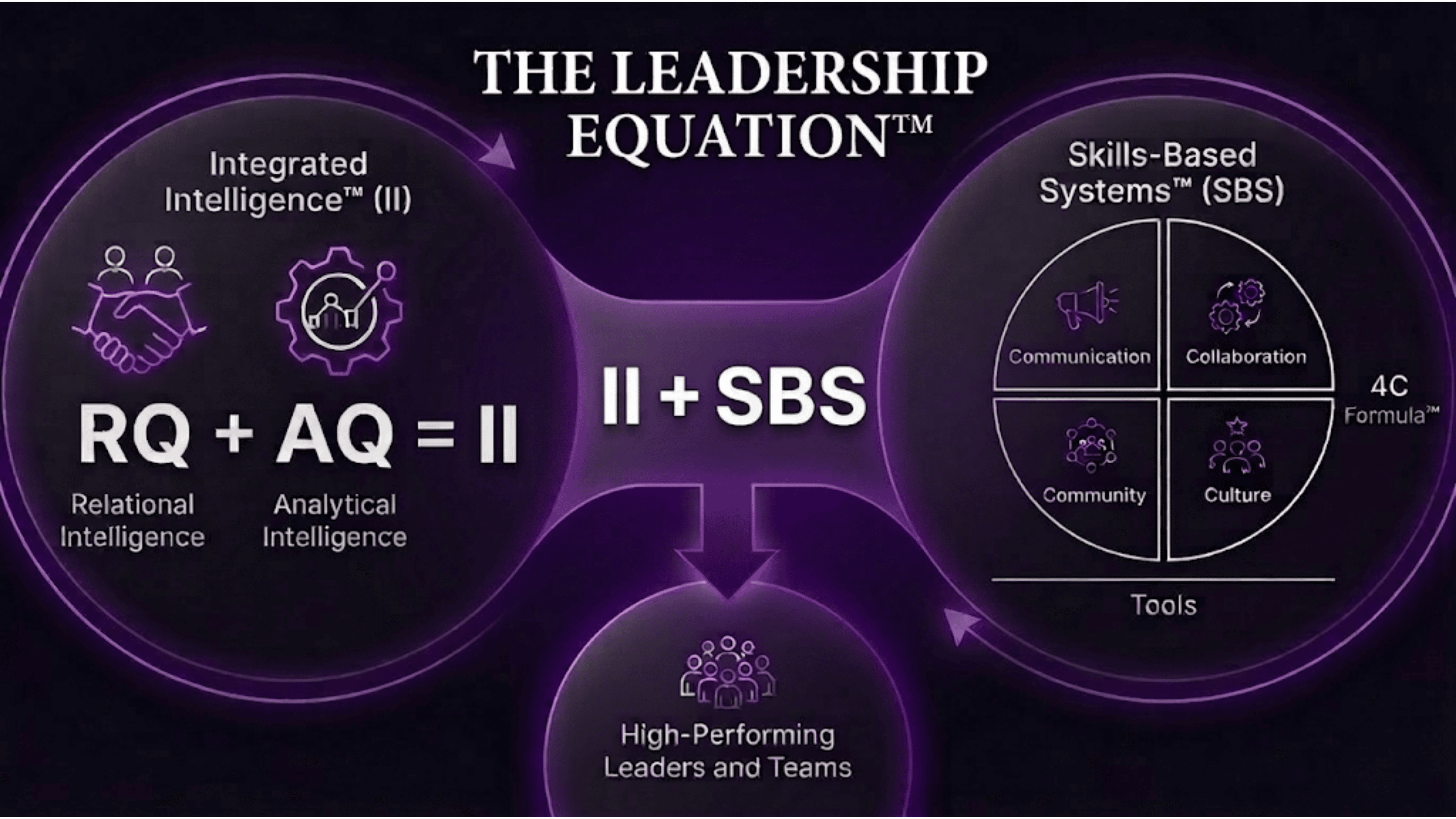
Think of it as a plane with two engines.
Engine one is Whole Brain Thinking. Engine two is the Skills-Based System powered by the 4C Formula™. One without the other doesn't get off the ground.
Navigating the complex web of human dynamics — eliminating friction and building genuinely cohesive teams. RQ is what takes action on the things emotional intelligence only signals.
The expertise to make sharp, data-driven decisions under pressure, when the cost of being wrong is real.
Combine them and you get Integrated Intelligence™ — like welding two pieces of steel together. Far stronger as one unit than either was alone.
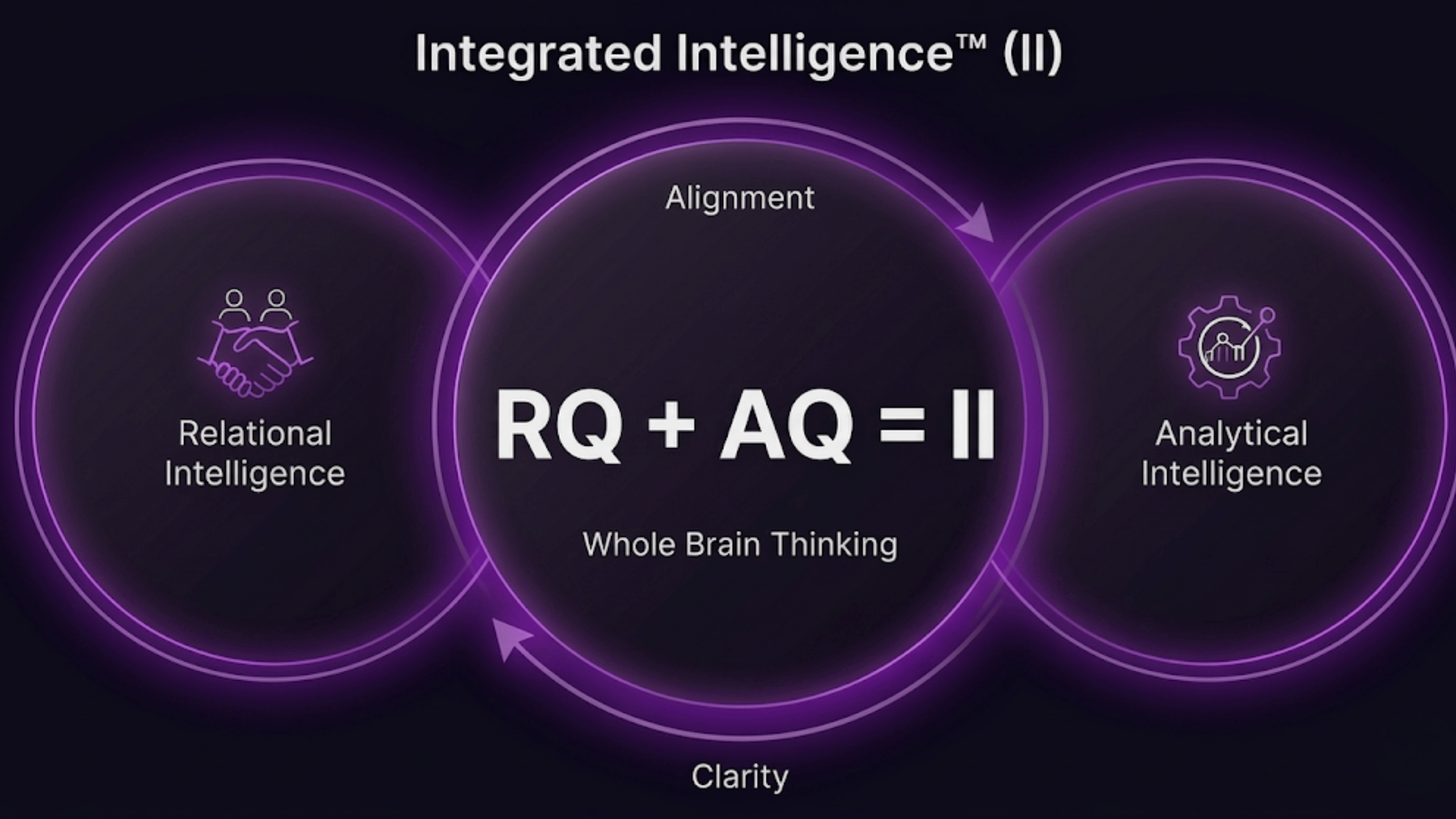
Emotional intelligence tells you something is wrong in the room. It doesn't tell you what to do about it, and at scale that gap gets expensive.
Why high-growth teams need Integrated Intelligence, not just EQ.
Why emotional intelligence fails in high-growth companies.
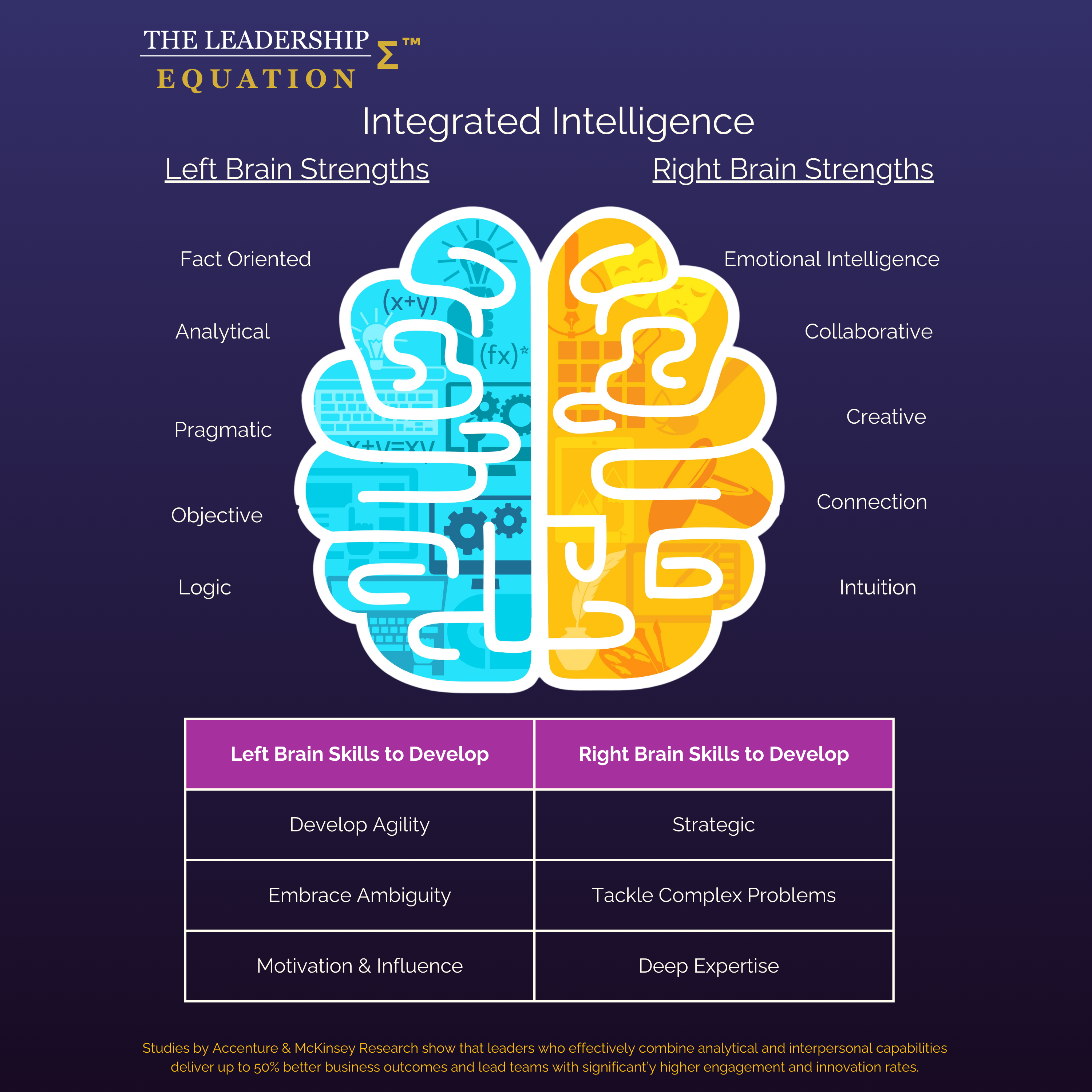
Most leadership teams are half a brain.
Half of my leadership team had high emotional intelligence. The other half was highly analytical. Each half was quietly certain the other was the problem.
You can't coach that away with a personality assessment. The only thing that brought them together was leading with the whole brain rather than the dominant half. That is where The Leadership Equation came from.
Once both engines are running, it compounds.
Whole-brain leadership isn't a state you arrive at. It's a cycle, and each stage makes the next one easier. Miss a stage and the wheel stalls where you'd expect it to.
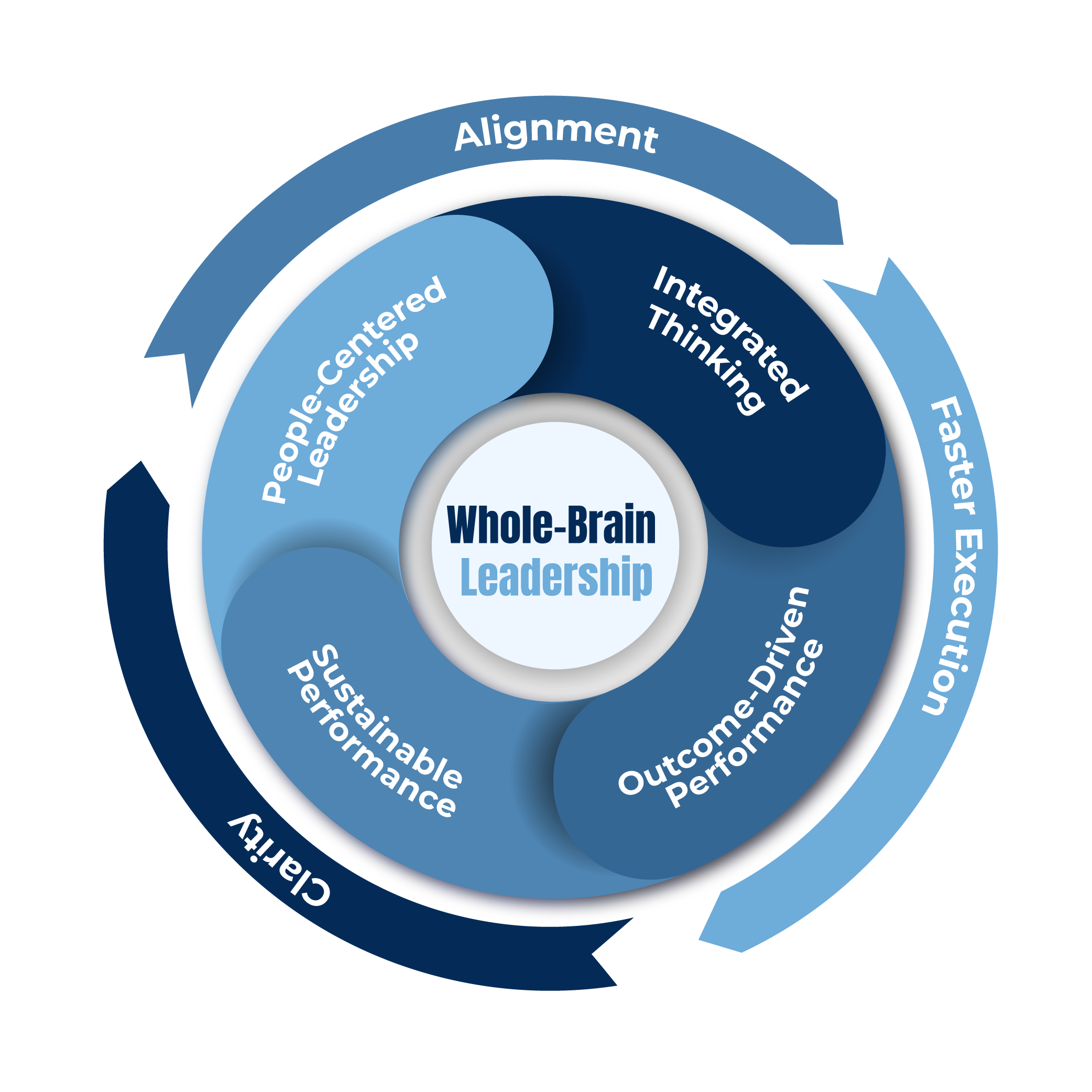
People-centered leadership
Start with the humans and the dynamics between them. Relational Intelligence does the work here.
Integrated thinking
Decisions made with the whole brain rather than the dominant half. This is Integrated Intelligence in practice.
Outcome-driven performance
Teams held to results rather than activity, because the systems make the results visible.
Sustainable performance
Performance that holds without heroics, and feeds straight back into the people it came from.
Skills-Based Systems™ — the architecture for how work gets done.
Integrated Intelligence changes how leaders think. It doesn't yet change how the work moves. Skills-Based Systems creates the clear, repeatable processes and workflows that scale — and it's what makes the results predictable instead of personality-dependent.
(Communication × Collaboration × Culture × Community) ÷ tools
Each C is a complete system for how teams get work done. The formula is multiplicative, not additive — which is why it behaves like a flywheel and gains momentum, and why a zero in any one of them collapses the whole thing.
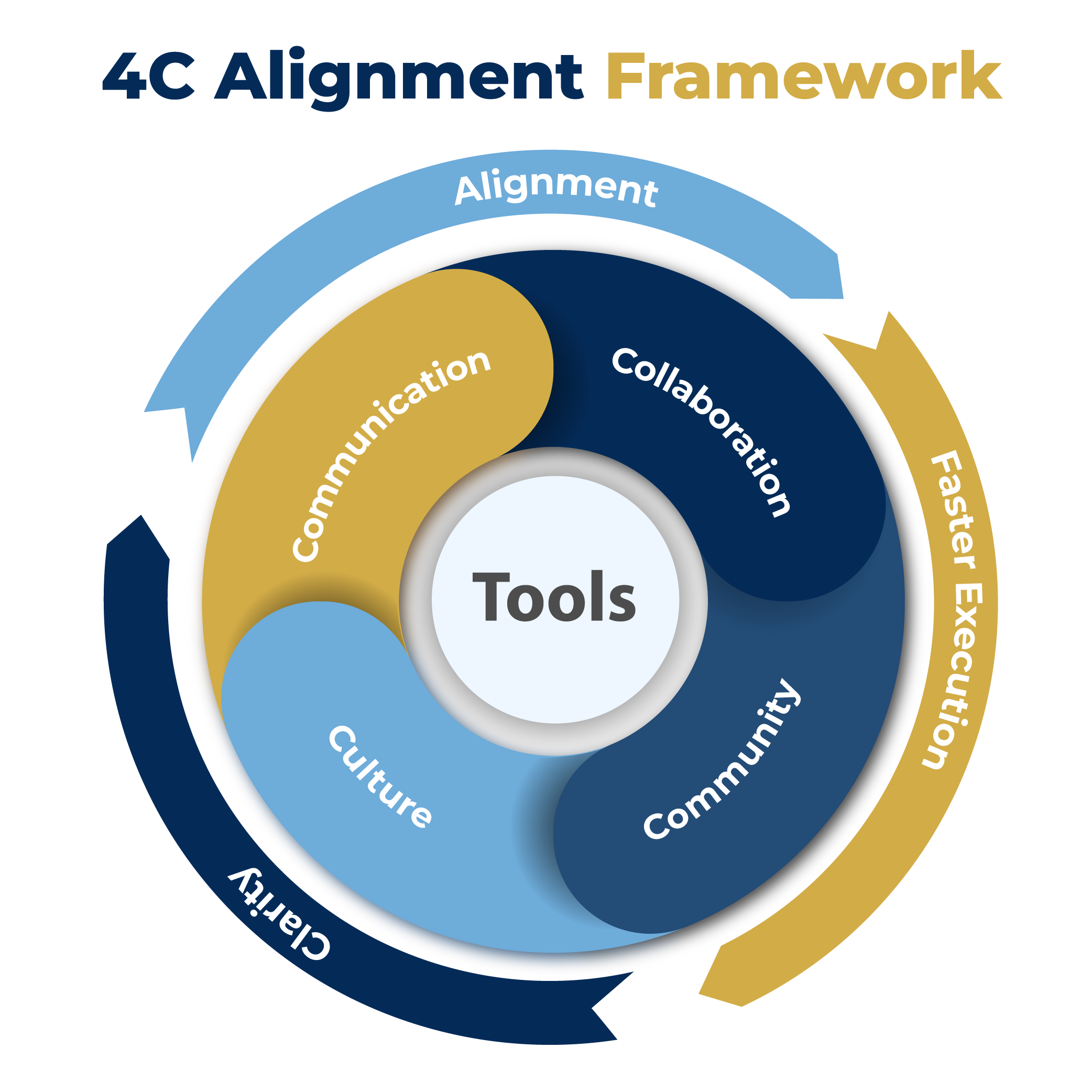
Communication
Who needs to know what, when, and through which channel — decided once, so nobody is guessing or waiting.
Collaboration
How work actually crosses team boundaries, including who owns which decision and where handoffs happen.
Culture
The behaviors that get rewarded and the ones that get tolerated. Written down, because unwritten culture defaults to whoever is loudest.
Community
The connective tissue that makes a distributed team feel like one team rather than several that share a payroll.
Tools sit in the denominator on purpose. More tooling divides the output — it doesn't multiply it.
Not rigid playbooks. An invisible fence.
My systems work the way the invisible fence keeps my dogs safe in the backyard. Guardrails keep the team aligned and out of trouble. Guiderails act like a GPS — several routes to the same destination.
Inside those boundaries, you and your team build the how. That's what secures buy-in: the system is built with them, not done to them.
Decision systems set the boundary for which calls sit with you and which sit with the team. They get real freedom to innovate. You get control where you actually need it.
This wasn't designed in a workshop. It was forged in the fire.
A $125M ARR EdTech SaaS acquisition. My new organization was spread around the world, with overlapping responsibilities, incompatible processes, and rising tension. Much of it came down to two ways of working — and the fact that we had been bitter rivals.
I heard Slack pings in my sleep.
First, RQ and AQ together to diagnose the hidden team dynamics. I had to create psychological safety while enforcing accountability — at the same time, with people who did not trust each other.
Then a third way. Rather than fight over whose process would win, I built one neither side owned, and systematized how leaders worked with each other and with their teams.
At 100 globally remote people, predictable results meant rebuilding how we worked as a system. That is the foundation of Skills-Based Systems.
“Tia possesses an incredible knack for problem-solving, often bringing forward innovative ideas that have solved complex issues, driving efficiency, and enhancing our operational capabilities. Her forward-thinking approach and creative solutions have had a lasting impact on our organization.”
 Scott PowellFounder & Board Member, CFI
“Tia possesses both vision and execution capability, setting ambitious goals while laying down practical steps to achieve them. Her operational prowess is about pushing the envelope, exploring new efficiencies, and enhancing our capabilities.”
 Anna TalericoVC Operating Partner
The same thinking, one altitude up.
Positioning Studio and Interview Studio are about landing the role — turning your experience into evidence a hiring manager can act on. The Leadership Equation is what happens after you're in the seat and the people become your responsibility.
Same systems thinking either way: name the parts, make the process repeatable, and stop depending on whoever happens to be in the room.
Turns your experience into evidence, mapped to the roles you're going after.
Trains you to surface your best answers in your own words, under real pressure.
Integrated Intelligence and Skills-Based Systems, validated at 100 people across 15 time zones.
If you're theory-weary, this was built under fire.
I used this exact system to navigate two acquisitions while scaling a globally remote team from 5 to 100 people. I've taught more than 10,000 people and mentored 30-plus leaders, using adult learning methods that make real-world experience stick. Twenty-eight years turning organizational complexity into clarity, alignment, and measurable outcomes.
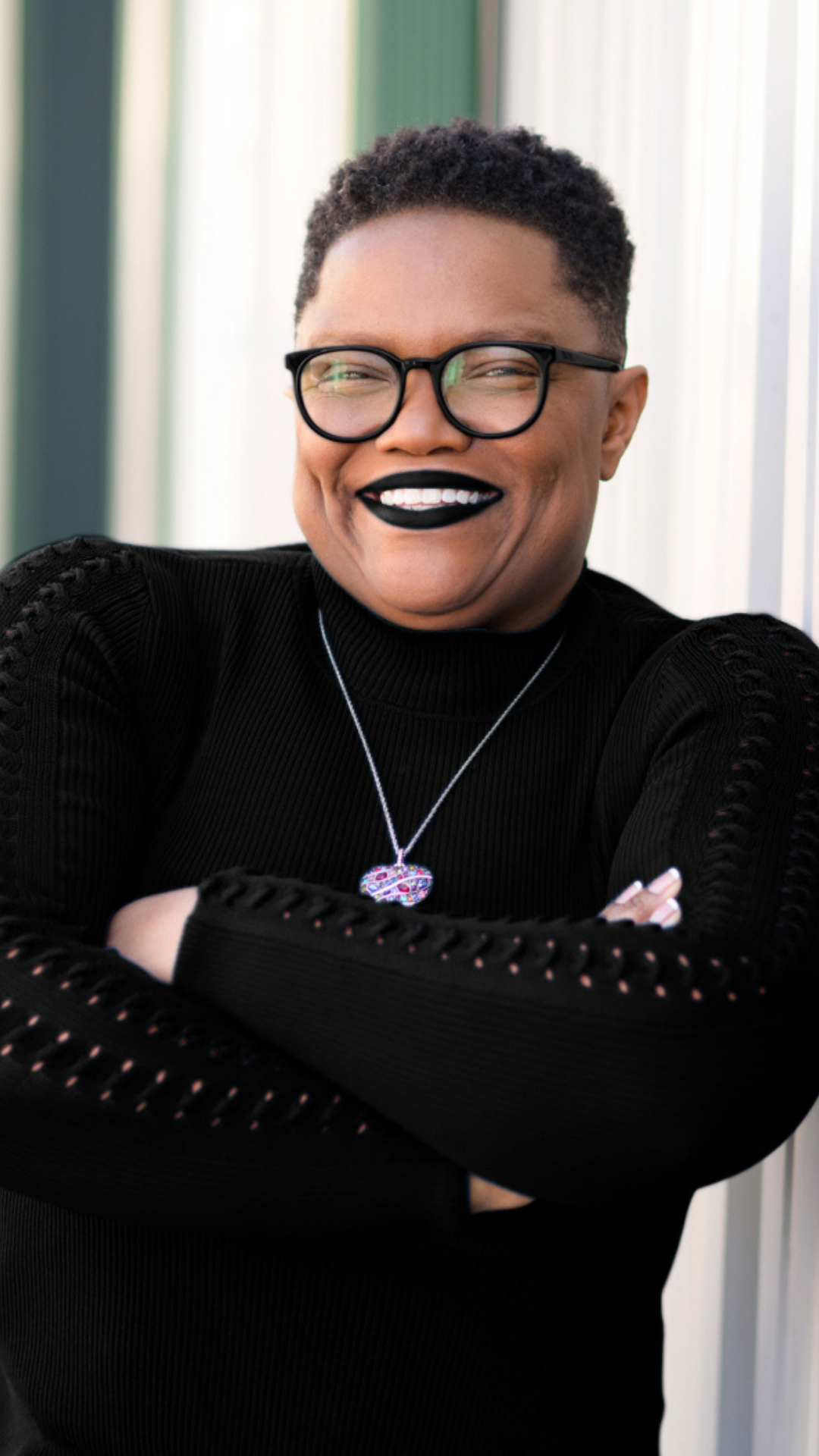
Ex-SVP CFI · Ex-VP A Cloud Guru